
Building Your First Algo Trading Strategy: A Practical Guide for Beginners
Many assume the work ends once an automated system goes live—but that’s when responsibility begins. Automation only executes your logic; a solid strategy performs, while a weak one fails faster. What you need isn’t just a platform, but a disciplined process.
5/8/20245 min read
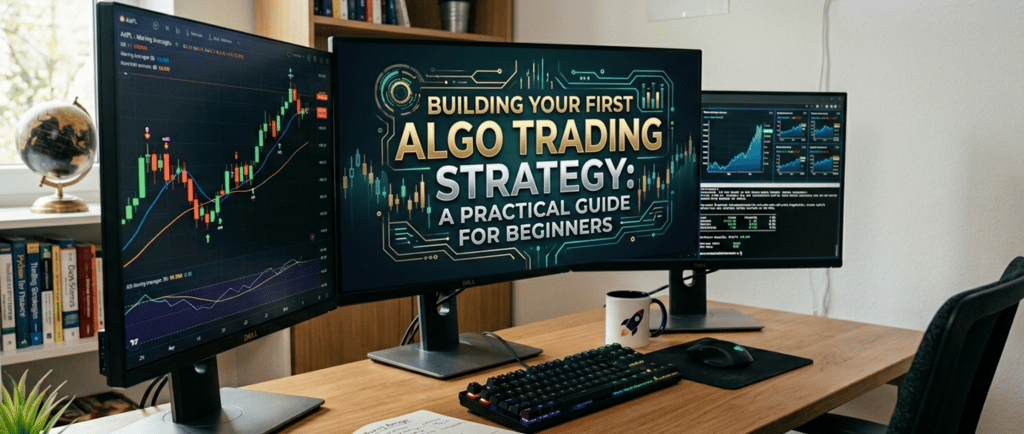
There is a common misconception among those new to automated trading that the moment a system goes live, the hard work is done. In reality, that is when accountability begins.
Automation does not generate profits on its own. It executes whatever logic you have built into it; nothing more, nothing less. A well-reasoned strategy, rigorously tested and carefully deployed, can perform consistently. A poorly constructed one will simply fail faster than a manual trader would.
If you are just getting started, what you need is not just a platform, you need a process. Here is one that works.
Before You Use Any Software
The single most overlooked step in automated trading is also the first one: understanding the market you intend to trade.
Price behaviour, volatility patterns, how different instruments respond to different conditions, what drives liquidity at various times of day; none of this knowledge comes from a platform. It comes from time spent studying markets seriously. Skipping this step and jumping straight to building a strategy is one of the most reliable ways to lose money systematically.
Only once you have a genuine understanding of market dynamics does it make sense to move on to strategy construction.
Step 1: Define What You Are Actually Trying to Do
Traders approach markets with very different goals, timeframes, and risk appetites. Before writing a single rule, be clear about the following:
Are you trading intraday or holding positions overnight?
Are you focused on equities, futures, or options?
How much capital are you allocating, and what drawdown are you prepared to absorb?
How frequently do you expect the strategy to trade, and have you accounted for transaction costs eating into returns at higher frequencies?
These are not administrative details. They are the constraints that determine what kind of strategy makes sense for you. A high-frequency intraday approach has entirely different requirements than a positional trend-following system. Getting clear on your parameters before building anything saves a significant amount of wasted effort later.
Step 2: Translate Your Market View Into Precise Rules
This is the step where automated trading fundamentally diverges from manual trading. A manual trader can act on instinct such as "this setup looks right." An automated system cannot. Every condition must be stated explicitly, without ambiguity.
Consider the difference between these two statements:
Manual thinking: "I'll buy when the trend looks strong."
Algo logic: "Enter a long position when the 20-period moving average crosses above the 50-period moving average, and the current price is above the opening price of the session."
The second version can be coded, tested, and evaluated. The first cannot.
Apply the same precision to exit conditions. At what profit target does the trade close? What is the stop loss? Is there a time-based exit before the market closes? Define each of these clearly, along with position sizing rules. Vague rules produce unreliable results; that is true whether a human or a machine is following them.
Step 3: Get Execution Right
A logically sound strategy can still underperform in live markets if execution is handled poorly. This is an area where many beginners underestimate the detail required.
Execution involves more than just placing an order. Order type, validity, market protection settings, how entries and exits are triggered; each of these parameters affects how your strategy actually behaves when real money is on the line. Think through each one deliberately, not as an afterthought once the strategy logic is finalised.
Step 4: Test in Real Market Conditions Before Committing Capital
Backtesting means running a strategy against historical data. It is a useful starting point, but it has known limitations. Historical data does not fully capture the friction of live markets: liquidity gaps, order book depth, slippage, and the unpredictability of real-time volatility.
Forward testing addresses this. It means running your strategy in live market conditions using virtual or paper trades, so the system is exposed to real price action without real money at risk.
A few weeks of forward testing across varied market conditions such as trending, sideways, high volatility, low volatility will surface issues that no amount of backtesting would reveal. Do not skip this step. The insights it generates are worth far more than the time it takes.
Step 5: Choose Your Implementation Path
Once you have confidence in the strategy logic, the next decision is how you want to build and deploy it. There are broadly two routes.
The first is the coding route. Traders with programming skills can connect directly to broker APIs using Python or similar languages, building fully custom systems with maximum flexibility. This approach offers control but demands technical infrastructure and ongoing maintenance.
The second is the no-code route. A growing number of platforms now allow traders to construct strategies through visual interfaces like selecting strategy types, defining entry and exit conditions, applying filters without writing any code. This has meaningfully changed who can participate in automated trading. A retail trader who would previously have needed a developer to build anything can now go from idea to deployed strategy independently.
Neither path is inherently superior. The right choice depends on your technical background, how much customisation you need, and how much time you want to spend on infrastructure versus strategy.
Step 6: Build Risk Controls Before Going Live
Strategy logic determines when you trade. Risk controls determine how much damage a bad run can do. Both matter equally, and yet risk management is consistently the part beginners spend the least time on.
Because an automated system executes without pause, the guardrails you define upfront are the only guardrails you have. That means setting hard limits on the number of open positions at any time, maximum loss thresholds per day or per trade, and profit targets at which the system steps back.
Running an automated strategy without these controls in place is not aggressive, it is reckless. The system will keep executing until something stops it, and without risk parameters, that something will likely be a significant drawdown.
Beyond platform-level controls, also think about how you are allocating capital across strategies if you are running more than one, and whether your position sizes are appropriate for your overall portfolio.
Step 7: Know When to Stay Out
Every strong automated trading system includes conditions that tell it when not to trade, not just when to trade.
Certain environments are consistently unfriendly to systematic strategies: the period immediately surrounding high-impact news events, sessions with unusually thin liquidity, moments of sudden and extreme volatility, and points where the day's loss threshold has already been reached. Trading through these conditions without filters exposes the system to exactly the kind of erratic price action that rule-based logic handles poorly.
Defining exit conditions from the market, not just from individual trades, is part of what separates a well-constructed strategy from one that looks reasonable on paper but struggles in practice.
Step 8: Deploy, Watch, and Refine
Going live is not the finish line. It is the beginning of an ongoing process of monitoring and improvement.
Track your live results against what your forward testing suggested. Pay attention to win rate, risk-reward ratios, and how the strategy behaves as market conditions shift. A system that performs well in a trending environment may struggle when markets turn volatile and vice versa.
Strategies have shelf lives. Market behaviour evolves, and a system that worked reliably for several months can start to deteriorate as conditions change. When that happens, the response is to revisit the underlying logic, not to let a broken system keep running in the hope that conditions will revert.
Automated trading rewards discipline and attentiveness, not passivity.
Putting It Together
The checklist above is not complex, but it requires honesty at every stage. Most beginners who struggle with automated trading do so not because the technology failed them, but because they rushed through the early steps; building before they understood, going live before they tested, or skipping risk controls because setting them up felt tedious.
The process works when you follow it in order. Start with a genuine understanding of the market. Build rules that are precise and testable. Test thoroughly before committing capital. Define your risk parameters with the same care you give your entry conditions. And once you are live, keep watching.
The platforms and tools available to retail traders today make the technical side of automated trading more accessible than it has ever been. What they cannot provide is the discipline and rigour that the process demands. That part is still yours to bring.
Help
Questions? Reach out anytime, we're here.
© 2026. All rights reserved.